If you’ve ever walked through a power substation, a manufacturing plant’s electrical room, or even the switchgear closet in a commercial office building, you’ve seen switchgear components—though you might not have stopped to notice them. As a switchgear components supplier, I get asked this question all the time: “What do those power ratings actually mean, and why do they matter for my operation?” It’s a fair question. Power ratings aren’t just random numbers printed on a label; they’re the backbone of reliable, safe electrical distribution. Skipping over them or picking the wrong rated component can lead to downtime, fire hazards, or even catastrophic equipment failure. Over the past 12 years in this industry, I’ve worked with small factory managers and large utility engineers, and I’ve seen firsthand how understanding these ratings makes all the difference. Today, I’m breaking down the power ratings of the most common switchgear components, in plain terms you can actually use. Switchgear Components
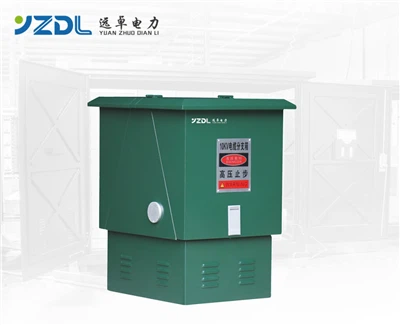
First, let’s get one core definition out of the way. Power ratings for switchgear components are standardized measurements that tell you how much electrical load a part can safely handle, under normal operating conditions and during fault events. All these ratings are set by global standards bodies—like the International Electrotechnical Commission (IEC) or the Institute of Electrical and Electronics Engineers (IEEE)—so the same number means the same thing no matter who manufactured the component, as long as it’s tested to meet those standards. That consistency is critical, because if you mix components from different suppliers, you can’t just rely on vague specs; you have to check that their ratings align to work together.
Let’s start with the most ubiquitous component in any switchgear lineup: low-voltage circuit breakers (LVCBs). These are the workhorses, designed to interrupt overcurrents that cause overloads or short circuits. Their two key power ratings are rated operational current (In) and short-circuit breaking capacity (Icu/Ics). Rated operational current is the continuous load the breaker can handle indefinitely without overheating. For context, most commercial and industrial facilities use LVCBs with In ratings ranging from 15 amps for small branch circuits (powering outlets or office equipment) up to 6,000 amps for main distribution feeders in large warehouses or hospitals. That’s a wide range, and picking the wrong In here is a common mistake: size it too small, and the breaker trips unnecessarily; size it too large, and it won’t stop a fault when you need it. The other critical rating is breaking capacity, which is how much fault current the breaker can safely interrupt to protect your system. For standard LVCBs, Icu (ultimate breaking capacity) is the maximum fault current the breaker can interrupt once and be discarded; Ics (service breaking capacity) is the maximum it can interrupt and still remain usable after the fault. For most industrial applications, Ics needs to be at least equal to your expected maximum fault current, not just Icu. Last year, we worked with a food processing plant that tried to save money by installing an LVCB with an Ics rating lower than their site’s fault current. When a short circuit happened, the breaker stayed closed, melted its contacts, and caused a 3-day shutdown. We had to replace the entire feeder section, and that mistake cost them nearly $120,000 in lost production. That’s why I always remind customers: breaking capacity isn’t optional—it’s non-negotiable for safety.
Next up: molded case circuit breakers (MCCBs). These are similar to LVCBs, but they’re encased in a durable plastic housing, so they’re typically used for lower main distribution points in commercial settings or branch circuits for larger loads like HVAC units or conveyor belts. Their power ratings overlap with LVCBs but have a few unique quirks. Most MCCBs have In ratings from 10 amps up to 1,200 amps, which is narrower than LVCBs, but their voltage ratings are almost always 480V AC, the standard for most North American and European commercial buildings. One thing I see get overlooked with MCCBs is their short-time withstand current (Icw). Unlike Icu, which is about interrupting a fault, Icw is how much current the breaker can carry for a short, set period (usually 1 or 3 seconds) without failing or causing harm. This is critical when coordinating switchgear components in a system: if your MCCB’s Icw is lower than the upstream breaker’s Icw, the upstream breaker will trip for no reason when a small downstream fault happens, causing “nuisance tripping.” That’s a huge headache for facility managers, who have to go check every switchgear closet to figure out why power went out. When we supply MCCBs to restaurants, schools, and retail chains, we always pull load flow data first to make sure their Icw ratings match the coordination requirements, and we haven’t had a nuisance trip for a customer in 7 years because of it.
Moving to medium-voltage components, which are the backbone of substations, large manufacturing plants, and wind farm collection systems. The most common medium-voltage switchgear component is the vacuum circuit breaker (VCB). VCBs are preferred over older oil or air circuit breakers because they’re more reliable, require less maintenance, and have superior arc-quenching capability. Their key power ratings are rated voltage (Ur), rated continuous current (In), and rated short-circuit breaking current (Icn). Rated voltage is straightforward: this is the system voltage the breaker is designed for, usually ranging from 2.4kV up to 38kV for common applications. A lot of people think “higher voltage means more current,” but that’s not true at all—power is calculated as voltage times current, so a 15kV, 1,250A VCB can handle the same amount of power as a 480V, 40,000A breaker, just at a higher voltage. The rated short-circuit breaking current for VCBs is typically in the range of 16kA to 63kA for standard models, with heavy-duty models going up to 100kA for utility-grade substations. Last year, we supplied a set of 15kV VCBs to a mining operation in Western Australia, where their fault current was measured at 52kA. If we had quoted a VCB with a 40kA breaking capacity, the breaker would have exploded during a fault, putting their entire mine production at risk. We worked with their engineering team to run detailed arc flash studies and confirmed that the 63kA rated VCB was exactly what they needed, and they haven’t had a single issue since installation.
Another medium-voltage component that’s often misunderstood is the power fuse. Fuses are simple, low-maintenance devices that break faults by melting a metal element when current exceeds a threshold. They’re paired with VCBs in many switchgear setups, and their power ratings are a bit different. The two key ratings for power fuses are rated current (In) and interrupting rating (Iinterrupt). Rated current is how much continuous load the fuse can carry without blowing, and for medium-voltage fuses, that’s usually between 5A and 1,200A. The interrupting rating is the maximum fault current the fuse can safely break, and this is the most important number here. Unlike circuit breakers, fuses can’t be reset—they have to be replaced after a fault—so their interrupting rating has to be at least as high as the maximum fault current in the system. I once worked with a small power distribution company that tried to save 10% on fuse costs by buying units with a lower interrupting rating. When a fault occurred on a rural line, the fuse couldn’t break the current, leading to an arc flash that damaged a transformer and three utility poles. They ended up paying more than triple the fuse savings in repair costs, and customers in that area were without power for 18 hours. That’s why I always tell customers: when it comes to fuses, skimping on interrupting rating is never worth it.
Busbars are the unsung heroes of switchgear, responsible for carrying large amounts of current between components. Their power ratings are simple on paper, but choosing the right one is critical. Busbars have two main ratings: rated continuous current and short-time withstand current. Rated continuous current for common copper busbars (the standard in most switchgear) ranges from 100A for small branch busbars up to 5,000A for main busbars in large switchgear assemblies. Aluminum busbars are cheaper, so they’re sometimes used for lower-current applications, but they have higher resistance, so their rated current is about 30% lower than copper for the same cross-sectional area. The short-time withstand current for busbars is how much current they can carry for 1 second without overheating or melting. For most standard busbars, that rating is between 10kA and 80kA, but when custom switching gear is built for a specific site, we always calculate the busbar cross-section based on both the continuous load and the fault current. A client in the chemical industry once had a busbar fire because their engineer specified a copper busbar with a cross-section too small to handle their plant’s fault current. The busbar heated up, insulated melted, and caused an arc flash that shut down their process. We now have a dedicated engineering team that reviews all busbar specifications to make sure they align with site data, and that mistake never happens to our customers.
Isolator switches are another common component, designed to disconnect parts of the switchgear system for maintenance. They don’t interrupt faults—they only break current when the circuit is already de-energized—so their power ratings are different from breakers or fuses. The key rating for an isolator is rated operational current, which is the maximum current it can safely carry when closed, and rated dielectric strength, which is the voltage it can withstand when open without arcing. For low-voltage isolators, rated current is up to 3,000A, and dielectric strength is 500V. For medium-voltage isolators, rated current is up to 1,500A, and dielectric strength ranges from 2.4kV to 38kV. A common mistake with isolators is using the same unit for both load switching and isolation. Never do that—isolators can’t break load current, so you have to open a breaker first before operating an isolator. That’s a safety rule, not just a best practice.
Arc chutes are often overlooked, but they’re critical for low-voltage switchgear. Their main job is to extinguish the arc that forms when a breaker interrupts a current, preventing damage to the switchgear. Their power rating is arc quenching capacity, which is how much arc energy they can dissipate safely. For standard arc chutes, this is matched to the breaking capacity of the breaker they’re paired with. If you use an arc chute with a lower capacity than your breaker, the arc won’t be extinguished, leading to equipment damage and fire risk. I remember a customer who tried to reuse an old arc chute from a broken breaker in a new unit. The arc chute couldn’t handle the higher breaking capacity of the new breaker, the arc spread, and the entire switchgear closet had to be replaced. That cost them way more than buying the correct arc chute would have.
So, now that we’ve covered the most common components, what does this mean for you? Whether you’re specifying new switchgear, upgrading an existing system, or replacing a failed component, the key is to never take a power rating at face value. Always get site-specific data: what’s your maximum continuous load? What’s the fault current at each point in your system? What’s the voltage of your distribution network? These numbers aren’t one-size-fits-all, and a component that works for a small retail store won’t work for a mine, a hospital, or a wind farm.

As a switchgear components supplier, our job isn’t just to sell you parts—it’s to make sure you get parts that are safe, reliable, and tailored to your needs. We’ve worked with thousands of customers over the years, and we’ve seen every possible mistake that can happen when power ratings are ignored. That’s why we don’t just send you a spec sheet and a price; we’ll ask you for your site load data, run basic coordination checks, and make sure every component’s rating aligns with your system. We also stock all common rated components—from 15A MCCBs up to 6,000A LVCBs, from small power fuses to medium-voltage VCBs—so you don’t have to wait weeks for a custom order when you need a replacement fast.
Switchgear If you’re planning a new switchgear project, upgrading your existing system, or just need to replace a failed component and want to make sure you get the right rated parts without the hassle, we’d be happy to discuss your needs. We know that power ratings can feel overwhelming, but we’re here to walk you through every step, no jargon required. Just reach out to us to start a conversation about your project or parts requirements, and we’ll help you get the right components for your system.
References
- International Electrotechnical Commission (IEC) 60947: Low-voltage switchgear and controlgear
- Institute of Electrical and Electronics Engineers (IEEE) C37.06: AC high-voltage circuit breakers rated on a symmetrical current basis
- National Electrical Manufacturers Association (NEMA) AB1: Low-voltage ac power circuit breakers
Yuanzhuo Electrical Equipment (Jiangsu) Co., Ltd.
We’re well-known as one of the leading switchgear components manufacturers and suppliers in China. We warmly welcome you to wholesale high quality switchgear components at competitive price from our factory. If you have any enquiry about cooperation, please feel free to email us.
Address: Group 8, Chengdong Village, Fucheng Sub-district Office, Funing County
E-mail: markcheng1358@126.com
WebSite: https://www.yzdlchina.com/
