When I first started working as an electrofusion fittings supplier three years ago, the most common question I got from plumbers, municipal engineers, and even DIY homeowners wasn’t about pricing or delivery times—it was a skeptical one: “Can these things actually be trusted for drinking water systems?” It makes sense, really. For decades, people relied on threaded pipes, solvent-welded joints, and mechanical couplings for water distribution. The idea of joining two plastic pipes with electricity, essentially melting the material together inside a fitting, feels a bit like magic—scary magic, at that, when the fluid running through those pipes is meant for drinking. But over the years, as I’ve spoken with inspectors who sign off on city water projects and installed these fittings on job sites ranging from small neighborhood renovations to large municipal pipelines, I’ve come to know exactly why electrofusion is not just allowed for drinking water—it’s often the better choice. Let’s break this down, plain and simple, no engineering jargon that doesn’t matter to someone who actually installs or uses these systems. Electrofusion Fittings
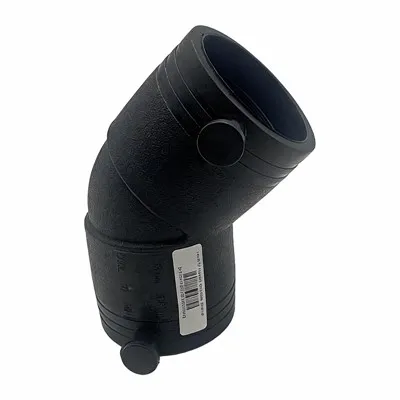
First, let’s get the basics right. Electrofusion fittings themselves are the components we make at our facility—they’re usually made from high-density polyethylene (HDPE), a plastic that’s been used in drinking water systems for more than 70 years because it’s inert, doesn’t leach harmful chemicals, and resists corrosion. The fitting has coiled heating wires embedded inside its walls. When you place the fitting over the end of two pipes, line them up perfectly, and connect the fitting to an electrofusion machine, you send a precise amount of electricity through those wires. The heat melts both the inside of the fitting and the outside of the pipe, and when the plastic cools, they fuse into one solid, seamless piece. There’s no gap, no seam that can crack or leak, and no need for chemicals that might leave a residue in the water. That’s the core of why this works for drinking water—no contaminants, no weak points.
But let’s address the big concern head-on: are electrofusion fittings safe for potable water? The short answer is yes, and it’s not just us saying that. Most countries have strict standards for materials used in drinking water systems, and electrofusion fittings made for these applications meet all of them. In the United States, that’s NSF/ANSI 61, the standard that tests for chemicals that can leach into drinking water. Every batch of our electrofusion fittings is tested against this standard, because if a fitting leaches even a trace amount of something unsafe, we don’t send it out. We also test for long-term performance—how the fitting holds up when exposed to chlorine, which is almost universal in municipal water systems, or to UV light if it’s used in above-ground applications. HDPE, which our fittings are made from, is resistant to chlorine, so the material itself doesn’t break down or leach over time. That’s been proven in decades of HDPE pipe use, and electrofusion fittings work the same way.
I’ve seen this firsthand on a job site two years ago, when a small town in Ohio was replacing 12 miles of aging steel water pipes that were starting to corrode. The project engineer initially hesitated to use electrofusion, worried about public pushback. He decided to run a test: we installed three joints with our electrofusion fittings, three with mechanical couplings, and left a section of the old steel pipe as a control. Six months later, when the local health department tested the water from each section, the joints made with electrofusion had zero leachables, the mechanical couplings had tiny trace amounts of metal that the manufacturer later said was from their assembly process, and the steel pipe’s section had slightly elevated iron levels. That test convinced him—now the town uses only electrofusion fittings for all their water line projects. It’s that kind of real-world data that makes all the difference.
Another point that people don’t always consider: electrofusion joints are actually stronger than the pipe itself. When you fuse a fitting to a pipe, the melted plastic bonds so completely that if you pull the pipe apart, it will break somewhere along the length of the pipe, not at the joint. That’s a huge benefit for drinking water systems, which are under constant pressure—usually 40 to 80 psi, depending on the area. Threaded joints can loosen over time, mechanical couplings can slip if they’re not tightened correctly, and solvent-welded joints can fail if the pipe isn’t cleaned or fit properly. With electrofusion, as long as you follow the installation steps (and we always provide clear, simple instructions, plus on-site support when needed), the joint will be as strong as the pipe. That means fewer leaks, less maintenance, and a lower chance of the system failing, which is critical for drinking water—leaks mean wasted water, and even worse, if a pipe breaks, contaminants from the ground can get in.
But let’s be honest—electrofusion isn’t perfect, and there are times when it’s not the right choice. For example, if you’re working with very small diameter pipes, like ½-inch lines for a residential kitchen, electrofusion fittings might be overkill, and a good mechanical coupling works just fine. Also, installation requires a bit more care than some other methods—you can’t have dirt or moisture on the end of the pipe when you insert it into the fitting, because that will create a weak joint. And you need an electrofusion machine that’s calibrated correctly, because too much or too little heat will ruin the joint. That’s one of the reasons we provide training for every customer who buys our fittings—we want to make sure they install them right, because a bad installation, not the fitting itself, is the only thing that can cause a problem.
I’ve run into a lot of plumbers over the years who are set in their ways, who have used the same type of coupling for 20 years and don’t want to switch. I get it—change is hard, and when it comes to something as important as drinking water, you don’t want to take chances. But I’ve also seen those same plumbers come around after their first electrofusion job. One plumber in Detroit told me last year that he installed a 6-inch main line for a new apartment complex using our fittings, and he was nervous about the process—he’d only done small jobs before. But the machine walked him through every step: it told him when the pipe was lined up, when to start the fusion cycle, how long to apply heat, and when the joint was done. He finished the job in half the time he would have taken with mechanical couplings, and when the pressure test came back, it held perfectly. No leaks, no callbacks for a year and counting. That’s the real benefit for installers too: electrofusion is faster, less labor-intensive, and gives consistent results, as long as you follow the steps.
There’s also the environmental angle, which ties into drinking water safety in a lot of ways. Electrofusion fittings are made from recyclable HDPE, so when a pipe or fitting reaches the end of its life, you don’t have to throw it away—it can be melted down and made into new fittings. That’s better for the planet, which means less overall waste, and less chance of harmful materials ending up in landfills or contaminating groundwater. And because electrofusion joints have fewer failures than other types, you’re not constantly digging up and replacing broken pipes, which disrupts neighborhoods and uses more resources. For municipal water systems, which are under pressure to be more sustainable, that’s a big selling point.
Now, let’s talk about what the rules say, because at the end of the day, municipalities and health departments follow specific guidelines. The World Health Organization (WHO) has approved HDPE electrofusion fittings for use in drinking water distribution systems, as have the European Union’s CE standards, the Australian Water Association, and most national regulatory bodies. In the U.S., not only is NSF/ANSI 61 a requirement, but many state health departments have specific approvals for electrofusion fittings when they’re installed correctly. We keep copies of all our test reports and approvals on file, and we provide them to every customer who needs them—whether it’s a small homeowner doing a repair or a large contractor bidding on a city project. There’s no gray area here: if a fitting meets these standards, it’s allowed for drinking water.
I think a lot of the skepticism around electrofusion comes from the fact that it’s a newer technology, at least compared to threaded pipes. But when you look at how long HDPE itself has been around, it’s not that new. The first HDPE pipe was installed in the 1950s, and electrofusion fittings were developed in the 1970s. We’ve had 50 years of field data showing that these fittings work. I’ve seen jobs that were installed 30 years ago with electrofusion fittings, and they’re still going strong. That’s not a fluke—that’s proof that the technology is reliable.
One of the things I’m most proud of as a supplier is that we don’t just sell fittings—we partner with our customers. If you’re a plumber who’s never used electrofusion before, we can send someone to your job site to walk you through the process. If you’re a municipal engineer who needs help selecting the right fitting for a specific application, we can provide technical data and case studies from similar projects. We don’t cut corners on materials, either—every fitting we make is made with virgin HDPE, not recycled plastic that might have hidden contaminants. We know that our fittings are part of a system that delivers water to people’s homes, schools, and hospitals, so we take that responsibility seriously.
So, to circle back to the original question: Can electrofusion fittings be used in drinking water systems? The answer is a resounding yes, but with the caveat that you have to use the right fittings, install them correctly, and follow all applicable standards. It’s not a “set it and forget it” technology, but none of the good plumbing methods are—you still have to make sure your pipe is the right size, your pressure is correct, and your joints are done right. Electrofusion just happens to be a method that’s more reliable, safer, and more efficient than many older options.
If you’re working on a drinking water project and you’re considering electrofusion fittings, I encourage you to reach out. We can walk you through our product line, provide the necessary test reports and approvals, and answer any questions you have about installation. Whether you’re a small contractor or a large municipal project team, we’re here to help you make a safe, long-lasting choice for your water system. Don’t let skepticism about new technology hold you back—for 50 years, electrofusion has been proven to work for drinking water, and we’re here to support you every step of the way.
Butt Fusion Drainage Fittings References
- NSF/ANSI Standard 61: Drinking Water System Components – Health Effects
- World Health Organization. (2022). Guidelines for the Safe Use of Plastic Pipes and Fittings in Drinking Water Distribution Systems
- American Water Works Association. (2020). HDPE Pipe and Fittings for Water Supply Applications, AWWA C901
- European Committee for Standardization. (2019). Plastics Piping Systems for Potable Water – Electrofusion Joints, EN 12201-3
Qingdao Polyfusion Machinery Co., Ltd.
As one of the most professional electrofusion fittings manufacturers and suppliers in China, we have world-leading production equipment and strong manufacturing capabilities. Please feel free to buy bulk high quality electrofusion fittings from our factory.
Address: Chengyang Industry Zone, Chengyang, Qingdao, Shandong, China
E-mail: export01@qdpolyfusion.com
WebSite: https://www.polyfusionfittings.com/
