If you’ve ever spent time on a manufacturing floor, watched a grinding and polishing line hum through the day taking raw metal, ceramic, or even plastic parts and turning them into finished, smooth components, you know how much work goes into not just building that line, but moving it. I’ve been supplying grinding and polishing lines to metal fabrication shops, aerospace parts makers, and even medical device manufacturers for over 12 years, and I can’t tell you how many times I’ve gotten a panicked call from a plant manager at 7 a.m. on a Monday: “We just got a new production floor laid out, and we need that line moved by the end of the week. Can you help?” Moving a grinding and polishing line isn’t like moving a desk or a pallet of boxes. These are industrial systems, often weighing tens of thousands of pounds, with complex, calibrated parts that can be thrown out of alignment in a second if you rush the job. Over the years, I’ve learned what works, what doesn’t, and what makes the difference between a seamless transition and a week of downtime that costs a shop more in lost output than the entire move itself. Grinding and Polishing Lines

First, let’s talk about why moving your grinding and polishing line is rarely a “one-size-fits-all” job. Every line we build is custom, right? A line for a company making automotive crankshafts is totally different from one for a company polishing dental implants. The components are different, the power requirements change, the space constraints in each plant are unique. That means when it’s time to move, your approach has to be tailored to that specific line. The first step, which most plants skip, is a full pre-move assessment. About six months before a planned move, I send one of our senior field technicians out to the site to walk the line, document every part, check the current alignment, note where the electrical and plumbing connections are, and even talk to the operators who run the line day in and day out. Those operators know things the blueprints don’t—like that the 10-foot section of the belt feeder has a slightly loose roller that’s never been fixed, or that the polishing head on Station 3 gets temperamental when it’s moved more than three feet. Ignoring that kind of on-the-ground knowledge is how you end up with a line that works fine in its new spot but has a dozen small issues that take months to fix.
When we did a move last year for a small aerospace parts manufacturer in Michigan, that pre-move assessment was everything. Their line was 120 feet long, designed to polish turbine blades, and it had been in the same spot for 15 years. The plant was adding a new quality control lab, so they needed the line shifted 80 feet down the main production hall. When our tech showed up, the operators told him that the transfer station between the grinding and polishing sections had a custom sensor that had been calibrated specifically for their blade dimensions—something we’d installed when we built the line, but hadn’t documented in the official blueprints because it was a last-minute add-on. If we’d just moved the line without checking, that sensor would have been off by a quarter of an inch, enough to cause every third blade to be rejected. We marked that sensor, even added a temporary label to it, and when we disassembled the line, we made sure to tag every part that interacted with it. That move went so smoothly that the line was up and running on a test run 12 hours after we finished, instead of the projected three days.
Next, disassembly is where most things go wrong if you don’t do it right. A grinding and polishing line is made of individual modules—usually a grinding station, a buffing station, a washing station, and a control cabinet, all connected by a conveyor or a series of rollers. Each module is heavy, and each has fragile, precision parts inside. The mistake I see most plants make is trying to disassemble the line themselves, cutting corners to save a little money, and not using the right tools. Last year, a tool and die shop in Ohio tried to move their line on their own. They rented a couple of fork trucks, disconnected the control cabinet, and decided to pull the entire conveyor section out in one piece. The conveyor was 40 feet long, and when they pulled it, the frame twisted just enough to bend the guide rails for the parts. By the time they got it to the new spot, the rails were so warped that they had to order a replacement, costing them two weeks of downtime and thousands of dollars in parts.
Our team’s approach to disassembly is methodical. First, we shut down all power, lock out and tag every electrical connection—something that’s non-negotiable for industrial equipment. Then, we disconnect all the utilities: compressed air lines, water lines for the washing station, the main power feed to the control cabinet. Every connection gets wrapped and labeled, so when we go to reassemble, we don’t have to guess where a 2-inch air line goes or which power cable is for the grinding station. For the larger modules, we use engineered lifting points. Every line we build comes with pre-installed lifting lugs on every heavy component—we design them into the frame from the start, so we’re not drilling holes or adding brackets that can weaken the frame. Those lugs are rated for the exact weight of the module, so we don’t have to worry about dropping or damaging parts during lifting. For the Michigan turbine blade line, we even had to remove the water tank from the washing section before lifting, because it was full and added 2,000 pounds to the module. We drained it on-site, labeled all the hoses, and then lifted the tank separately, instead of trying to move it full and risking a spill that would damage the floor or the equipment.
Then there’s transportation. This isn’t moving a line across the country—most moves are within the same plant, right? Even so, you can’t just roll a 5,000-pound grinding station across a concrete floor and expect it to stay aligned. We use heavy-duty dollies with polyurethane wheels that are rated for industrial loads, and we have a team that guides each module slowly, making sure to avoid cracks, uneven spots, and any ramps in the plant. Even a small bump can jostle the precision parts inside a polishing head, throwing off its balance. I once watched a crew rush a move in a California metal shop, rolling a 3,000-pound buffing station over a small expansion joint in the floor. The buffing wheel inside got knocked out of balance, and when they started the line back up, it vibrated so badly that it cracked the frame of the control cabinet. That cost them a week of repairs and another week of re-calibrating the line. When we move lines within a plant, we also use temporary support stands for every module while we’re moving them, so they don’t sag or twist in transit. For longer moves, between buildings, we work with specialized heavy transport companies that have experience moving industrial equipment. We never use a general freight company—they don’t understand the sensitivity of precision grinding and polishing parts, and they’ll often strap a module down without considering that it might need to be held at a specific angle to avoid damaging a shaft or a sensor.
Once you get the line to its new spot, that’s when alignment comes in—and this is the part that separates a temporary fix from a line that will run reliably for years. A grinding and polishing line’s performance depends on three things: its structural alignment (so all the modules are level and in a straight line), its conveyor alignment (so parts move smoothly from one station to the next without getting stuck), and the alignment of each individual grinding or polishing head (so they make even contact with the parts, no uneven grinding or over-polishing). Most plants use a basic level and a tape measure, but that’s not enough. We use laser alignment tools for the structural alignment of the main frame, accurate to within a thousandth of an inch. For the heads, we use dial indicators to check their runout—any more than a few thousandths of an inch of runout, and the finish on your parts will be inconsistent.
For the Michigan turbine blade line, we spent three days on alignment. The control cabinet needed to be mounted 18 inches off the floor for operator access, so we used adjustable jacks to level it, then bolted it to the floor with anchor bolts rated for vibration. The conveyor that moves the blades between stations had to be aligned so that each blade was centered as it passed under the grinding head—any offset would cause the grinding wheel to wear unevenly, cutting down its lifespan. We tested the conveyor by running dummy blades through it 50 times, checking for any jams or misalignment, before we even powered on the line for the first time. A lot of shops will skip that step, but we’ve learned that testing during alignment catches problems that would come up later, during production runs.
Recommissioning the line is the final step, and it’s not just flipping a switch. After alignment, we run a series of test cycles with dummy parts, making sure each station is working as it should. For a polishing line, that means testing the speed of the buffing wheel, the pressure it applies to the parts, and the finish quality. We adjust those parameters based on the part type, because a stainless steel crankshaft needs a different pressure than a titanium medical implant. We also train the operators on the new layout, because moving the line can change how they interact with it. In the Ohio tool and die shop that tried to move their line on their own, they didn’t train their operators, so even after they fixed the warped rails, the operators were confused about the new control panel layout, and it took them a week to get back to their normal production rate. That’s why part of our move service includes on-site operator training for the new setup—operators are the ones who run the line, so they need to feel comfortable with it.
Wait, let’s talk about a common mistake that a lot of plant managers make when planning a move: not building enough downtime into their schedule. I get it—production is money, and shutting down a line even for a day feels like a loss. But rushing the move leads to more downtime in the long run. We always advise clients to plan for at least twice as much time as they think they’ll need. For the Michigan line, they thought it would take two days to move and set up. We told them to plan for five, and it took exactly four, because we built in extra time for alignment and testing. If we’d tried to do it in two days, we would have rushed the alignment, and we would have had issues during their first production run.
Another thing to consider is regulatory compliance, especially if you’re moving a line that’s used for parts in medical devices or aerospace. A lot of those parts are subject to FDA or ISO regulations, and moving the line changes the calibration and the setup, which might require recertification. When we work with clients in those industries, we bring our calibration team with us, and we provide all the documentation they need to submit to their regulators, so they don’t have to go through the hassle of proving the line is up to code after the move. We had a customer in Texas that makes hip implants—they moved their line to a new facility, and because we handled all the calibration documentation, they were able to get their new production approved without any delays. That’s the kind of thing that makes a move worth investing in, instead of trying to do it on your own.
I know what some of you are thinking: “Why not just buy a new line instead of moving this one?” That’s a fair question. Moving a line is usually cheaper than buying a new one, especially if the line is still in good condition. But it only works if you do it right. A line that’s been properly disassembled, transported, and reassembled can run just as well as a new line, for a fraction of the cost. We’ve had lines that are 20 years old, moved three times, that still put out parts with the same precision as they did when they were new. The key is not cutting corners on the process.
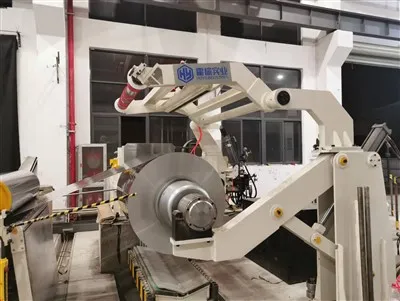
At the end of the day, moving a grinding and polishing line is about more than just moving heavy equipment. It’s about minimizing downtime, preserving the precision that makes your parts high-quality, and making sure your line is up and running as quickly as possible. I’ve seen too many plants make the mistake of trying to save a few dollars on a move, only to lose weeks of production and thousands of dollars in repairs. That’s why our team focuses on the details: pre-move assessments, methodical disassembly, proper transportation, precise alignment, and thorough testing. If you’re planning a move for your grinding and polishing line, don’t try to do it alone. We’ve spent 12 years perfecting this process, and we can make sure your move is seamless. We can work around your production schedule, handle all the disassembly and reassembly, and make sure your line is back up and running with no lost precision. If you’re tired of dealing with the stress of moving industrial equipment, and you want a team that knows grinding and polishing lines inside and out, reach out to us to discuss your next project.
Slitting Lines References
- Industrial Equipment Transport and Installation Best Practices. Material Handling Industry of America, 2021.
- Precision Alignment for Manufacturing Equipment. Society of Manufacturing Engineers, 2019.
- Calibration and Recertification of Industrial Grinding and Polishing Systems. International Organization for Standardization, 2020.
- Lockout/Tagout Procedures for Industrial Machinery. Occupational Safety and Health Administration, 2022.
Shanghai HOYO Industries Co., Ltd.
Shanghai HOYO Industries Co., Ltd. is one of the most professional grinding and polishing lines manufacturers and suppliers in China, featured by quality products and competitive price. Please rest assured to buy cheap grinding and polishing lines for sale here from our factory. Contact us for customized service.
Address: No.8, Jianding Road, Fengjing Town, Jinshan District, Shanghai, China
E-mail: info@hoyomachinery.com
WebSite: https://www.hoyomachinery.com/
