What are the lubrication requirements for a PPR pipe machine? PPR Pipe Machine
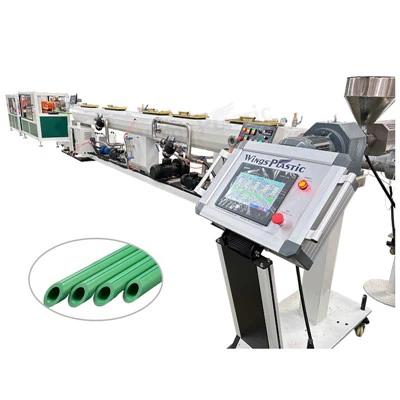
Hey there! I’m a supplier of PPR pipe machines, and I often get asked about the lubrication requirements for these machines. It’s a crucial topic because proper lubrication can significantly extend the lifespan of the machine, improve its performance, and reduce maintenance costs. So, let’s dive right in and talk about what you need to know.
Why lubrication is important
First off, let me tell you why lubrication is such a big deal for PPR pipe machines. These machines have a lot of moving parts, like screws, barrels, gears, and bearings. When these parts move against each other, there’s friction. Friction creates heat, and if it’s not properly managed, it can cause wear and tear on the components. Over time, this can lead to breakdowns, decreased efficiency, and even complete failure of the machine.
Lubrication acts as a buffer between these moving parts. It reduces friction, which in turn reduces heat generation. This helps to keep the parts cool and running smoothly. It also prevents metal-to-metal contact, which can cause corrosion and damage. In short, good lubrication is like giving your PPR pipe machine a health boost.
Types of lubricants
There are several types of lubricants that can be used for PPR pipe machines, and choosing the right one depends on a few factors such as the specific parts being lubricated and the operating conditions.
Oil-based lubricants
Oil-based lubricants are a popular choice because they offer excellent lubrication properties. They can penetrate narrow spaces and provide a thin, protective film between moving parts. Mineral oils are commonly used, especially for general-purpose lubrication of gears and bearings. Synthetic oils, on the other hand, are more expensive but offer better performance in extreme conditions. They have a higher resistance to oxidation and can withstand higher temperatures without breaking down. For example, in a PPR pipe machine that operates at a high speed or in a hot environment, synthetic oil might be a better choice.
Grease
Grease is another option for lubrication. It’s a thicker substance compared to oil, and it stays in place better. This makes it ideal for parts that require long – term lubrication or are in hard – to – reach areas. For instance, the bearings in the conveyor system of a PPR pipe machine can be well – lubricated with grease. Grease also has good sealing properties, which can prevent dust and dirt from getting into the components. There are different types of grease, such as lithium – based and calcium – based. Lithium – based grease is widely used because it has good mechanical stability and can work over a wide temperature range.
Dry lubricants
In some cases, dry lubricants like graphite or molybdenum disulfide are used. These lubricants are in a powder form and are useful when you need to avoid oil or grease contamination. For example, if the PPR pipe production process requires a clean environment and any oil or grease spillage could be a problem, dry lubricants can be a great alternative.
Lubrication points
Now, let’s talk about the key lubrication points on a PPR pipe machine.
Screw and barrel
The screw and barrel are the heart of the PPR pipe machine. They are responsible for melting and mixing the PPR material. The screw rotates inside the barrel, and proper lubrication is essential to reduce the friction between them. Usually, a high – quality synthetic oil is used to lubricate the screw drive system. This helps the screw to rotate smoothly, ensuring uniform melting and extrusion of the PPR material.
Gearbox
The gearbox in a PPR pipe machine transfers power from the motor to the different parts of the machine. It contains gears that mesh together, and friction between these gears can cause damage. Regular lubrication of the gearbox with an appropriate gear oil is necessary. The oil should be able to handle the high – load and high – speed operation of the gears. You need to check the oil level regularly and change it at the recommended intervals to keep the gearbox in good working condition.
Bearings
Bearings are used throughout the PPR pipe machine to support rotating shafts. There are different types of bearings, such as ball bearings and roller bearings. Lubricating these bearings is crucial to prevent premature wear. Grease is often used for bearings because it can stay in place and provide long – lasting lubrication. You need to make sure that the bearings are properly packed with grease during installation and re – greased at regular intervals.
Conveyor system
The conveyor system is used to move the finished PPR pipes from the extrusion area to the storage or packaging area. The rollers and chains of the conveyor need to be lubricated to ensure smooth operation. Oil or grease can be used depending on the design of the conveyor. For example, if the rollers have a sealed – bearing design, grease might be the best choice, while an open – chain conveyor could benefit from an oil – based lubricant.
Lubrication frequency
Determining the right lubrication frequency is also important. It can’t be too often or too rare.
The frequency of lubrication depends on several factors. The operating hours of the machine are a major factor. If the machine runs continuously for long hours, it will require more frequent lubrication compared to a machine that operates intermittently. The environment in which the machine is located also matters. If the machine is in a dusty or dirty environment, the lubricants can get contaminated more quickly, and you’ll need to change them more often.
As a general rule of thumb, for the screw and barrel, you might need to check the lubrication system daily and top up the oil if necessary. The gearbox oil should be changed every few months, depending on the manufacturer’s recommendations. Bearings usually need to be re – greased every few hundred operating hours. And for the conveyor system, lubrication can be done on a weekly or bi – weekly basis.
Maintenance tips
Here are some maintenance tips to ensure that the lubrication system of your PPR pipe machine works well.
First, always use the lubricants recommended by the machine manufacturer. They have tested the machine with specific lubricants and know what works best. Second, keep the lubrication points clean. Before applying lubricant, make sure there is no dirt, dust, or old lubricant on the parts. This can prevent contamination of the new lubricant. Third, monitor the performance of the machine closely. If you notice any unusual noises, vibrations, or changes in the output quality, it could be a sign of improper lubrication. Check the lubrication system immediately and take corrective action.
Conclusion
Well, that’s a comprehensive look at the lubrication requirements for a PPR pipe machine. As you can see, proper lubrication is essential for the smooth operation and long – term reliability of the machine. By choosing the right lubricants, lubricating the right points at the right frequency, and following good maintenance practices, you can keep your PPR pipe machine in top shape.
If you’re in the market for a PPR pipe machine or have any questions about lubrication or other aspects of these machines, don’t hesitate to reach out. We’re here to help you make the best decision for your production needs and ensure that your machine runs efficiently for years to come.
Plastic Corrugated Pipe Machine References
- "Handbook of Plastics Processing Machinery"
- "Lubrication Fundamentals" by Howard S. Rowen
Qingdao Wings Plastic Technology Co., Ltd.
As one of the most experienced ppr pipe machine manufacturers and suppliers in China, we also support customized service. Please feel free to buy durable ppr pipe machine made in China here from our factory. For price consultation, contact us.
Address: C02 Of Anshengyi Road, No.2 Fuan Industry Zone,Jiaodong Town, Jiaozhou City, Qingdao City, Shandong Province,China
E-mail: kelly@wingsplastic.com
WebSite: https://www.wingsextruder.com/
